
Wall Damage That Disappears After Repair
Drywall Repair and Painting in Pittsfield for holes, cracks, and surface damage that leave walls looking unfinished or inconsistent
A patched wall that reads as a patch is a repair that did not finish the job. KJ Home Improvement LLC handles drywall repair and painting in Pittsfield for walls and ceilings where damage—whether a small nail hole, a fist-sized impact, or a spreading surface crack—has made the room look neglected. The visible result of a properly completed repair is not a smooth spot in the middle of a wall; it is a surface that reads as continuous from edge to edge.
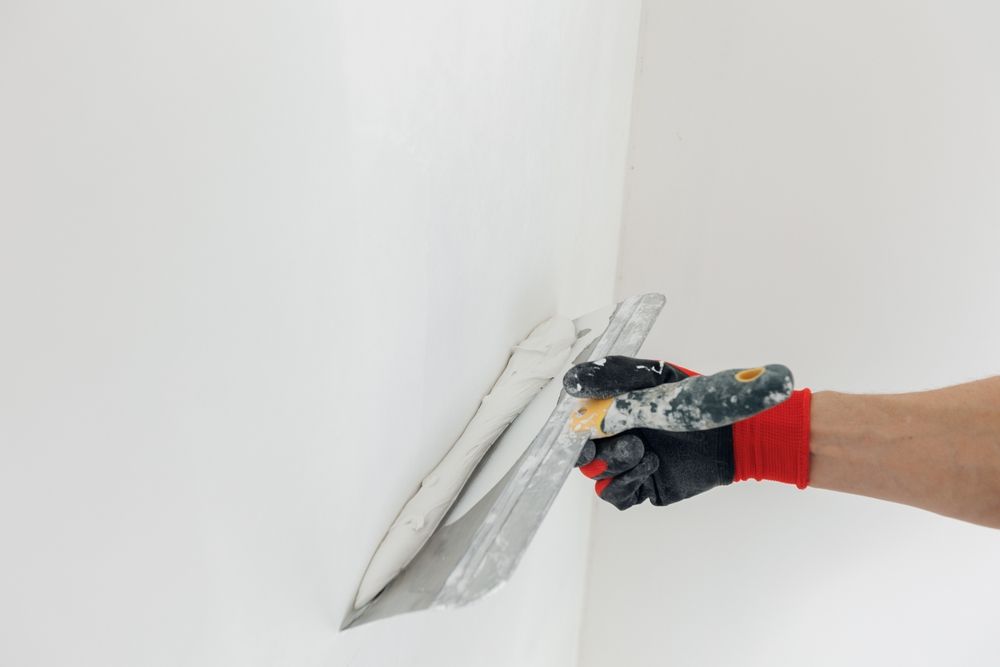
The repair process moves through a specific sequence: damaged material is stabilized or removed, appropriate patching compound is applied in layers, each layer is allowed to dry fully before the next, and the surface is sanded between stages to bring it flush with the surrounding drywall. Skipping any of those stages produces a repair that looks fine the day of application and shows its outline clearly once the paint dries. After sanding, the repaired area is primed before paint is applied—primer seals the patch and prevents the finished coat from absorbing unevenly, which is what causes repaired spots to flash or read differently than the surrounding wall.
Schedule an on-site assessment to review the extent of the damage and determine the appropriate repair approach for your walls.
How Paint Matching Makes the Repair Invisible
Paint matching is often where drywall repairs succeed or fail visually. Even a structurally sound repair stands out if the paint applied over it does not match the surrounding wall in color, sheen, and texture. KJ Home Improvement LLC approaches color matching by working from the existing paint where possible and accounting for the fact that wall paint changes appearance as it ages—a direct match to a fresh chip may still look different against paint that has been on the wall for several years.
Once repair and repainting are complete, the wall reads as a single continuous surface rather than a field of paint interrupted by a visible patch. That outcome depends on feathering the paint beyond the repaired zone and blending into the surrounding area rather than cutting a hard edge at the boundary of the damage. In rooms with flat or matte finishes, that blending is more forgiving; in rooms with eggshell or semi-gloss, sheen differences show more readily, and the technique has to account for that.
Older homes in Pittsfield often have walls with textured finishes applied decades ago—skip trowel, orange peel, or knockdown patterns that are no longer in common use. Matching those textures before painting requires recreating the pattern in the patched area before any primer or paint goes on. That step is part of a complete repair, not an optional add-on.
Answers About How the Work Is Done
Drywall repair involves more steps than most people expect when they look at a small hole or a surface crack. The questions below explain how the process works and what determines a clean result.
- What preparation is done before patching compound is applied? The damaged area is cleaned of loose material and any paper facing that has separated from the drywall. For larger holes, a backing support is installed so the compound has a stable surface to bond to and does not flex or crack as it cures.
- How many coats of compound are typically applied during a repair? Most repairs require at least two to three coats of joint compound, with drying and sanding between each. The first coat fills the void, subsequent coats build toward flush, and the final sanding brings the surface even with the surrounding wall without leaving visible ridges at the edges.
- Why does paint applied over a repair sometimes look different from the rest of the wall? Unprimed drywall compound absorbs paint differently than the surrounding wall surface, causing the repaired area to appear shinier or flatter than the rest of the wall. Priming the patch before painting seals that difference and allows the finish coat to absorb evenly across the entire surface.
- How is a textured wall surface handled when the texture needs to match after repair? The existing texture pattern is identified first, then recreated on the patched area using the appropriate technique—spray, trowel, or stipple—before any primer is applied. The texture must fully cure before painting so it does not shift or crack when the paint dries over it.
- What should you look for in a completed drywall repair to confirm it was done correctly? When you view the wall in raking light—light coming from a low angle across the surface—a well-executed repair shows no ridges, depressions, or visible seam lines. The paint sheen should appear consistent with the surrounding wall rather than brighter or flatter at the patched area.
KJ Home Improvement LLC can assess your wall damage directly and outline exactly what the repair and repainting will involve. Connect with the team to set up a walk-through of the affected areas and confirm the repair scope before work begins.