
One Wall That Changes the Whole Room
Accent Wall Painting in Pittsfield for rooms where a single surface needs to carry visual weight and define the space
Choosing the wrong wall for an accent treatment—or applying it without clean edges and consistent coverage—produces a result that calls attention to itself for the wrong reasons. KJ Home Improvement LLC provides accent wall painting in Pittsfield for living rooms, bedrooms, dining areas, and offices where one surface is meant to create a focal point rather than blend into the background. The work is about precision: the right wall chosen based on the room's layout, and the paint applied in a way that holds its edges and reads as deliberate.
Surface preparation begins before any color goes on. The wall is cleaned, any existing damage is addressed, and the surface is primed where the base material or the existing paint color requires it—particularly when applying a deep or saturated color over a lighter background, where skipping primer results in uneven coverage that takes additional coats to correct. Lines are masked with care at every transition: where the accent wall meets adjacent walls, the ceiling, baseboards, and any trim or architectural detail. Clean tape lines and steady brush work at those boundaries are what separate a finished result from one that looks like a weekend project.
Request a consultation to discuss color direction and identify which wall in your room will carry the accent treatment most effectively.
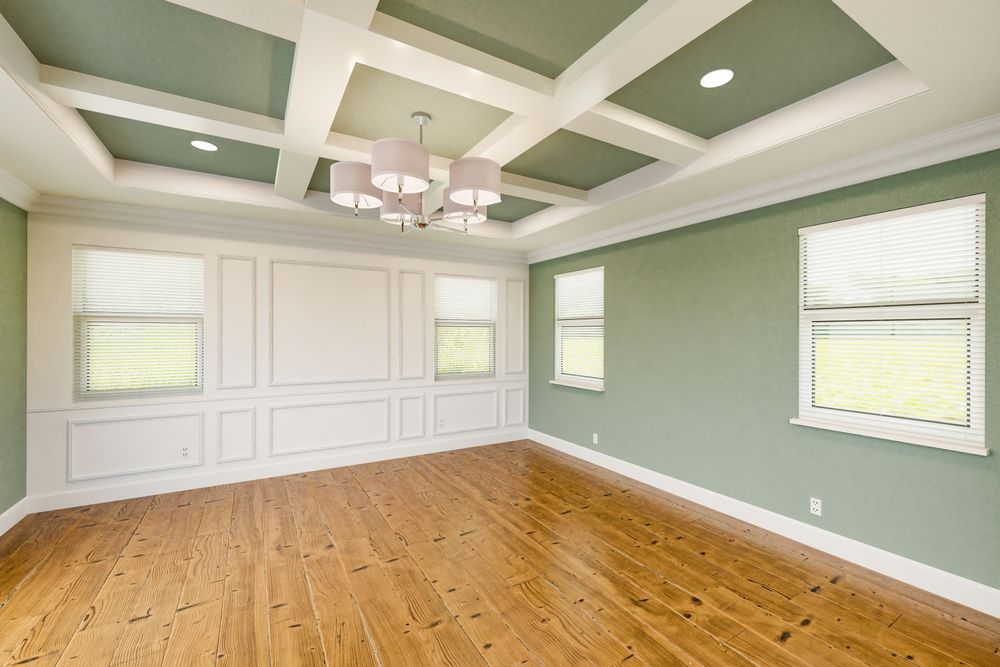
The Difference Between a Feature Wall and Just a Painted Wall
An accent wall works when the color choice and the wall selection reinforce each other. The wall that benefits most from an accent treatment is usually the one the eye lands on naturally when entering the room—often the wall opposite the entry point or the one anchoring a furniture arrangement. Selecting a color that contrasts with the surrounding walls without clashing with the fixed elements in the room—flooring, trim, and built-in cabinetry—is a decision that affects how the finished room reads as a whole, not just how the accent wall looks on its own.
Once KJ Home Improvement LLC completes the accent wall, the room reads with more definition and depth than it had before—the furniture arrangement has a clear anchor, and the space feels more intentional without requiring a full repaint of every surface. That result depends on consistent coverage with no streaking or lap marks, which is a function of application technique and paint quality rather than color selection alone.
Rooms in older Pittsfield properties sometimes present specific conditions that affect accent wall work: plaster walls with surface irregularities, window and door casings with period profiles that require careful masking, or ceilings with textured finishes that require a clean cut-in line rather than tape. Each of those conditions is accounted for in the preparation phase so the finished result is consistent regardless of what the wall looks like before work begins.
Questions Before Starting Your Project
Accent wall projects involve decisions about color, wall selection, and surface condition that affect how the finished room looks. The questions below address how those decisions are made and what the work involves.
- How is the right wall identified for an accent treatment? The wall that carries an accent most effectively is typically the one with the strongest visual relationship to the room's main entry point or primary seating arrangement. Walls with windows or doors interrupt the surface and typically read less cleanly as a feature wall than unbroken surfaces.
- Why does surface preparation matter for an accent wall specifically? Because the accent wall draws more visual attention than adjacent surfaces, any imperfections—surface texture inconsistencies, visible patching, or lap marks in the paint—are more noticeable than they would be on a wall painted the same color as the rest of the room. Preparation determines whether the accent reads as a design choice or exposes the wall's defects.
- What is the correct sequence for masking and painting when the accent wall meets trim and ceiling? Trim and ceiling lines are masked before painting begins, and the tape is removed while the paint is still slightly wet rather than after it has fully dried. Removing tape from dried paint pulls the edge of the paint film and leaves a jagged line rather than the clean edge that defines quality work.
- How does existing paint color on adjacent walls affect the color selection for an accent wall? Saturated or dark accent colors applied next to existing light walls require the accent wall to be primed first so the new color reaches its true depth in fewer coats. Without primer, the existing paint color shifts the final appearance of the accent color, particularly with warm or cool undertones that interact differently with the underlying surface.
- What should you look for when checking a completed accent wall for quality? View the wall in natural light from multiple angles. The coverage should be even with no visible streaking or areas where the base coat reads through. At edges where the accent meets trim, ceiling, or adjacent walls, the line should be straight and consistent rather than feathered or ragged.
KJ Home Improvement LLC can walk through your room, discuss color direction based on your existing finishes, and complete the accent wall with the edge quality and coverage consistency that makes the treatment work. Set up a consultation to move the project forward.